
Heels for Indian Weddings: What to Wear, What to Avoid, and How to Last the Entire Night
By CLASSIE Journal
An Indian wedding isn't a two-hour affair. It's a full day — sometimes two or three days — of ceremonies, photographs, meals, dancing, and standing on every kind of surface from marble floors to outdoor lawns to farm turf.
Your heels need to survive all of it. And look good doing it.
Here's the realistic guide to choosing heels for an Indian wedding — whether you're the bride, a bridesmaid, or a guest.
The Basic Rules for Wedding Heels
Before we get to specific styles, there are a few rules that apply regardless of what you're wearing:
Avoid stilettos for outdoor ceremonies. Thin heels and lawn grass don't mix. You'll spend the entire ceremony with one heel slowly sinking into the ground. Block heels on any outdoor surface — gardens, farmhouses, outdoor venues.
Go lower than you think you need to. You'll be wearing these for 6–10 hours. A 2.5-inch block heel that's comfortable at hour eight is infinitely better than a 4-inch heel you'll take off at hour three.
Match the metal to your jewellery, not the outfit. Gold outfit doesn't automatically mean gold shoes. Match the metal tone of your shoe hardware and accessories to your jewellery — it creates cohesion without having to colour-match the shoe to a lehenga shade.
The floor matters. Marble floors are slippery for leather soles. Outdoor turf is a stiletto trap. Rubber soles or suede soles grip better on most wedding surfaces.
For the Bride
Bridal footwear has one job: make you feel beautiful without making you suffer. After a point, no photograph is worth pain that lasts three days.
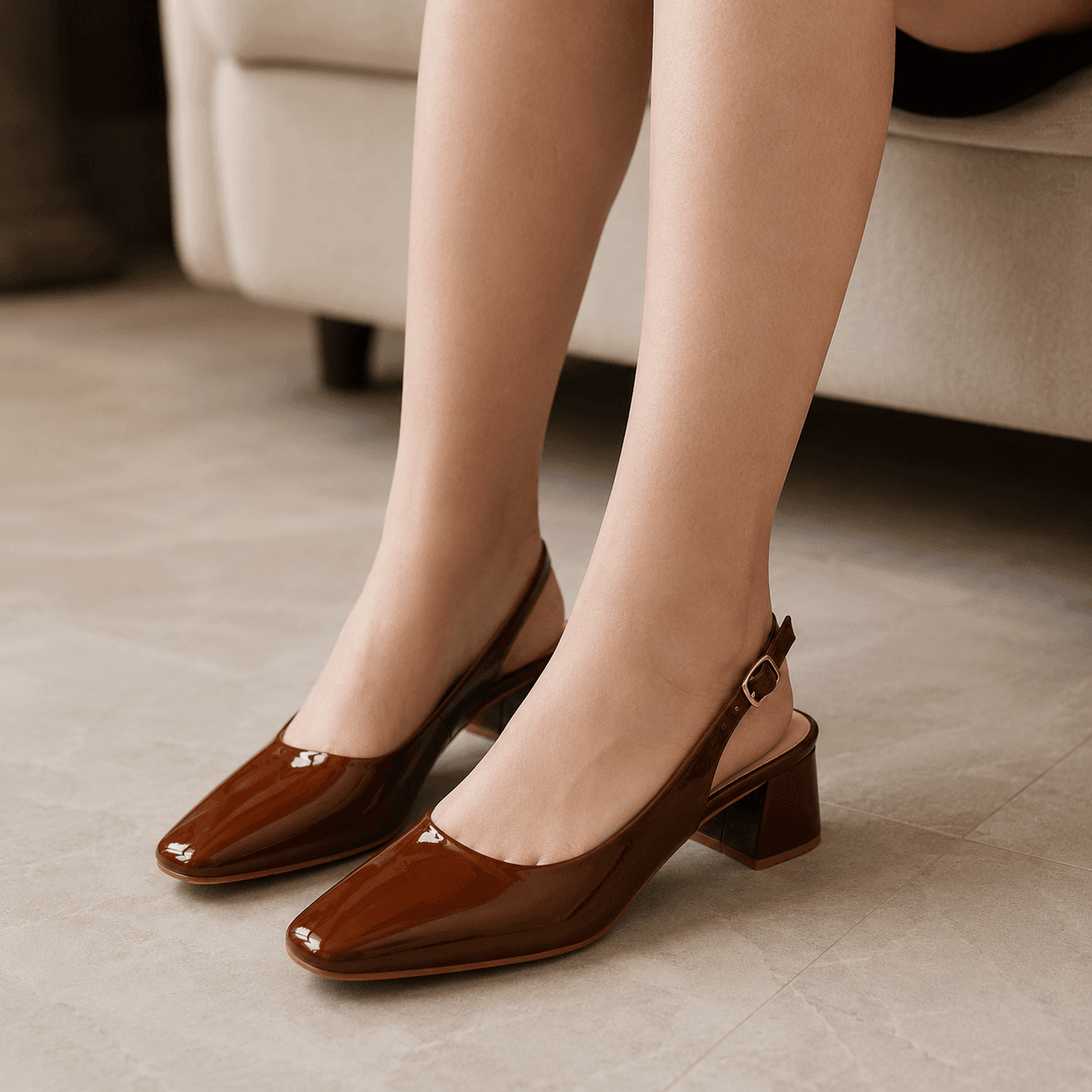
The ideal bridal heel is 2.5–3 inches, block or stable sculpted heel, with a cushioned insole. A pointed toe works for photographs but becomes painful after hours; a rounded or slightly square toe is kinder for extended wear.
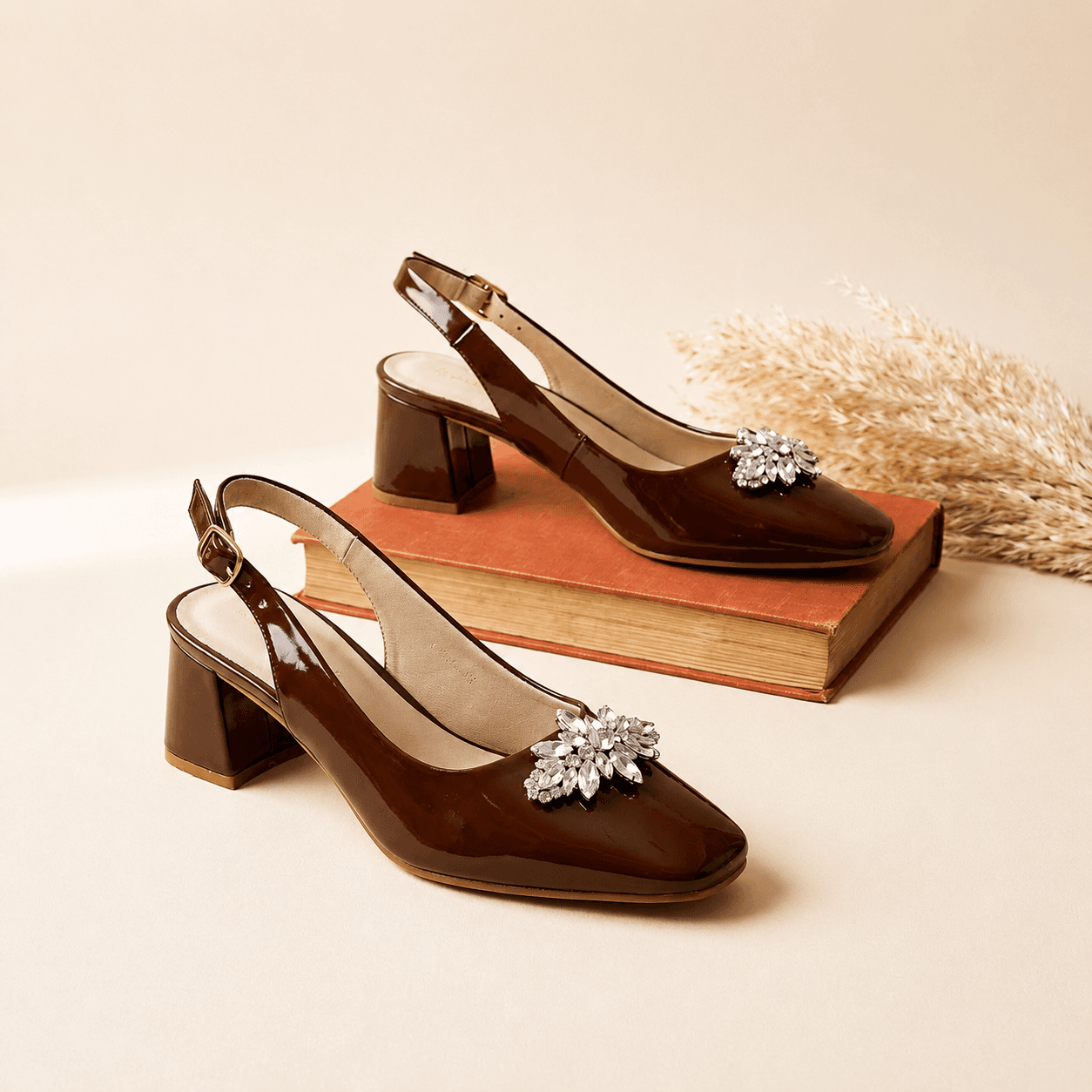
Colour: Off-white, ivory, and blush work with most bridal lehengas. The CLASSIE Velora Milk — a 3-inch block heel in matte off-white — was designed with exactly this in mind. It pairs with bridal whites, pastels, and even soft gold lehengas. And it's designed to be clipped on with rhinestone or pearl shoe clips, so it can go from understated to embellished based on the ceremony.
Height: Consider your partner's height. If there's a significant height difference, a lower heel keeps proportions natural and makes standing together more comfortable for photographs.
Red and wine: For brides in deep red lehengas, a matching deep-toned heel creates a dramatic, pulled-together look. The CLASSIE Clessia Wine — 3-inch sculpted heel in wine satin — is the kind of shoe that looks like it was made for a red bridal look.
For Bridesmaids
Bridesmaids spend more time on their feet than almost anyone else at a wedding. You're helping, coordinating, fixing things, carrying things, dancing. Your heels need to survive everything.
Priority: comfort first, then style. A 2.5-inch block heel in a neutral or coordinated colour. Avoid matching each other too precisely — coordinated but not identical usually looks better in photographs anyway.
For Wedding Guests
As a guest, you have the most freedom — and can often get away with something more interesting than the conventional choices.
Safe choices: Black block heels, nude block heels, metallic block heels. These work with almost any guest outfit from a saree to a lehenga to an anarkali.
Statement choices: A coloured heel that picks up on a colour in your outfit — a teal heel with a teal dupatta, a blush heel with a blush lehenga. The Tressa Teal with its rhinestone ankle strap is exactly the kind of statement shoe that works for a wedding guest who wants to be remembered.
The rhinestone strap heel: The Tressa Black — 3.5-inch slim heel with a hand-embellished rainbow rhinestone ankle strap — is one of the most photographed heels for wedding guests. It works with almost any outfit and photographs beautifully.
Day Events vs Evening Events
Daytime ceremonies (haldi, mehendi, morning puja): Lower, more casual heels. Even block-heeled sandals or kitten heels. Save your best pair for the main ceremony and reception.
Sangeet: This is where dancing happens. You need a heel you can actually move in — stable, not too high, secure fit. A block heel with an ankle strap stays on better during dancing.
Main ceremony: Your most beautiful pair. This is what appears in the important photographs.
Reception: You've been wearing heels all day. This is actually a good time to switch to something slightly lower if you have the option — or keep the same pair if it's held up well.
One Practical Tip Nobody Talks About
Bring a small pouch with three things: a blister bandage (for any spots that start rubbing), a heel grip (a thin foam strip that prevents the heel from slipping), and a single folded gel insert for the ball of your foot. You'll probably never need them — but the one time you do, you'll be grateful.