
Ethnic Heels for Indian Outfits: Which Styles Work and Why
By CLASSIE Journal
The rules that apply to Western footwear don't automatically transfer to Indian ethnic wear. A heel that looks perfect with a blazer and trousers might look wrong under a heavy lehenga. A sandal that works beautifully with jeans might look underdressed with a silk anarkali.
Indian ethnic outfits have specific requirements from footwear — requirements that come from the visual weight of the garments, the occasions they're worn for, and the way Indian fabrics and embroidery interact with heel silhouettes. Here's how to navigate all of it.
The Core Challenge with Ethnic Wear and Heels
Most Indian ethnic outfits — particularly formal ones — are visually very rich. Embroidery, zari, mirror work, heavy fabrics, multiple layers. The heel you choose needs to either complement that richness or deliberately contrast it. What it can't do is disappear into it or compete awkwardly with it.
This means that very plain, minimal heels often look lost under heavy ethnic outfits. And very elaborate, embellished heels can compete with the outfit rather than complete it.
The sweet spot: a heel with enough visual weight to hold its own under rich fabric, but clean enough in its design to let the outfit remain the focus.
Lehengas
The lehenga presents a specific challenge because the skirt is voluminous and the heel needs to be set at the right height for the hem to rest correctly.
Height: 2.5–3.5 inches is the working range for most lehengas. The hem is typically pinned to the correct length based on heel height — confirm with your tailor or the person helping you dress exactly which heels you plan to wear.
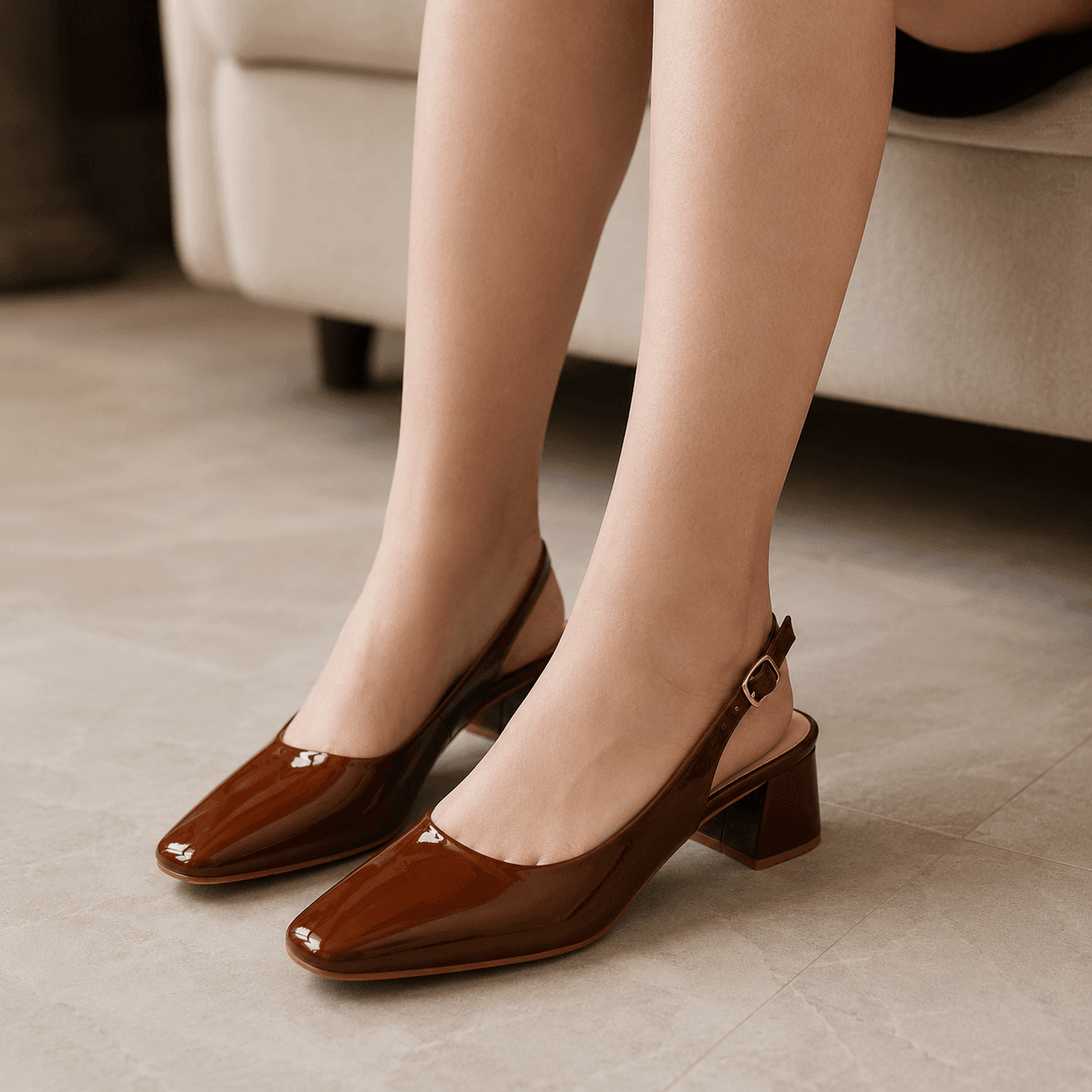
Style: Block heels work well under lehengas because the visual weight of the heel balances the visual weight of the skirt. A thin stiletto can look delicate and lost under a full lehenga silhouette.
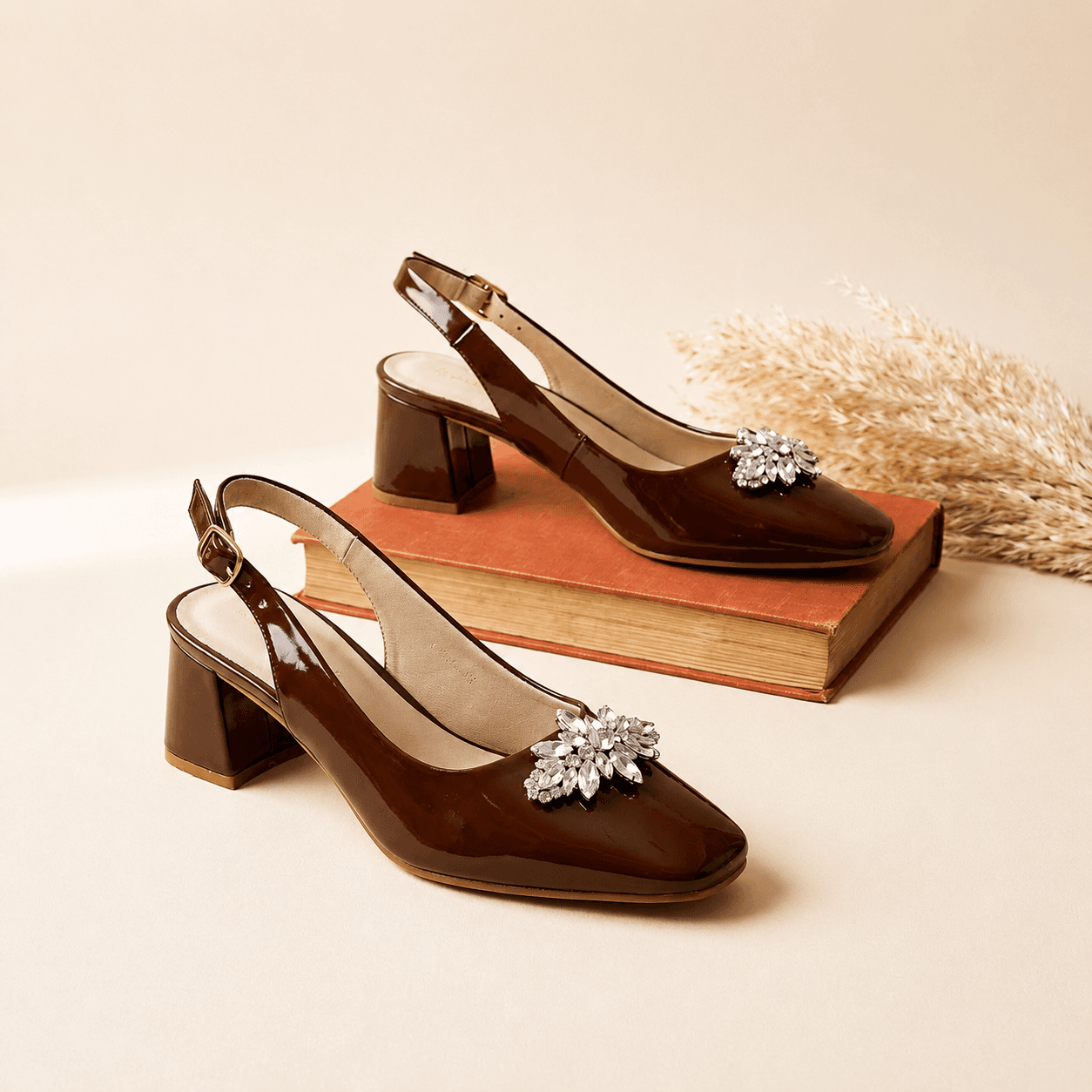
Colour: Match the heel to the blouse or dupatta colour rather than the skirt. If the lehenga is red with a gold-embroidered blouse, a gold heel creates beautiful coherence. The CLASSIE Tressa Black with its rhinestone strap reads as neutral under most lehenga colours while adding embellishment that matches the festive formality of the outfit.
Anarkalis and Churidars
Anarkalis are floor-length or near-floor-length, which means the heel is mostly hidden — only the toe peeks out at the front hem. This is actually the most forgiving ethnic wear context for heels because the visible portion is minimal.
The priority for anarkali footwear is therefore comfort, because the visual contribution of the heel is limited. A cushioned block heel or kitten heel that you can wear for hours is a better choice than an elaborate stiletto that only its wearer knows you're wearing.
The Velora Black or Gloss Belle block heels are excellent anarkali choices — classic, formal enough for the occasion, and comfortable for extended wear.
Sharara and Palazzo Sets
Wide-leg sharara and palazzo suits create a similar effect to sarees — the hem grazes the floor and the toe of the heel appears with each step. This means the toe shape matters here in the same way it does with sarees.
A pointed toe emerging from the hem of a sharara with each step looks deliberate and elegant. A square toe looks modern and intentional. A very rounded, chunky toe can look unintentionally casual under the relative formality of a sharara set.
Colour coordination with shararas follows the same logic as lehengas — match the heel to the dupatta or top rather than the trouser.
Gold and Silver Heels for Ethnic Wear
Metallic heels are, in many ways, the easiest choice for Indian ethnic wear because they coordinate with almost everything. Gold jewellery is the default in most Indian ethnic outfits, and a gold heel matches without any specific coordination effort.
Gold heels work particularly well with: red, maroon, wine, deep green, navy, ivory, cream, and bridal white outfits — essentially all the classic Indian festive and formal colour palette.
Silver heels work better with cooler tones: pale blue, grey, lavender, black, and white ethnic outfits where gold would look too warm.
Comfort for Ethnic Occasions
Indian ethnic occasions are long. A sangeet runs from evening to midnight. A wedding day starts in the morning and ends late at night. The heel you choose for ethnic wear needs to be wearable for the full duration.
This is the most practical argument for block heels over stilettos in ethnic contexts — not style, but endurance. A 3-inch block heel with a cushioned insole at hour eight of a wedding day is a very different experience from a 3.5-inch stiletto at the same point.
CLASSIE heels include a Classie Comfort cushioned insole specifically to address this. The difference between a cushioned and uncushioned insole becomes most apparent in exactly the kind of extended wear that ethnic occasions demand.