
Heels with Saree: The Only Guide You Need to Get It Right
By CLASSIE Journal
Wearing heels with a saree is one of those combinations that looks effortless when it's right — and slightly off when it isn't. The difference usually comes down to one or two small decisions: heel height, toe shape, or colour. Get those right, and the heel becomes invisible in the best possible way — it's just part of a look that works.
Here's the complete breakdown.
Why Heel Height Matters More with Sarees
With most outfits, heel height is a choice about style and comfort. With sarees, it's also a functional decision — the drape length is set when the saree is pinned, and if you then wear a significantly different heel height than expected, the hem either drags on the floor or rises above the ankle. Neither looks right.
The practical rule: decide your heel height before you drape or pin the saree, and drape accordingly. If you're having the saree pinned or stitched, tell the tailor or the person helping you exactly which heels you'll be wearing.
For most women, a 2.5–3 inch heel under a saree creates the right length and posture. High enough to give the saree drape its best silhouette, low enough to manage the drape comfortably through a long event.
Block Heels vs Kitten Heels for Sarees
Block heels are almost universally recommended for sarees — and for good reason. The stability of a block heel makes navigating stairs, stepping onto and off stages, walking across different floor surfaces, and managing the pallu significantly easier than a thin heel. The wider base also distributes your weight better when you're holding the pallu or managing the drape with one hand.
The CLASSIE Velora Black — a 3-inch block heel in suede — is one of the strongest choices for sarees precisely because the suede sole grips slightly better on marble and wooden floors than patent leather does. The Gloss Belle Black at 2.5 inches is a good choice for women who want a little less height while keeping the same block heel stability.
Kitten heels work well for sarees in more casual or daytime contexts — cotton sarees, work sarees, and occasions where maximum comfort is the priority. The Crovia Chocolate Brown kitten heel in alligator-textured fabric works particularly well with cotton and linen sarees where the textural interest of the shoe complements the natural character of the fabric.
Toe Shape and the Saree
The toe of the heel shows at the front hem of the saree with each step. This means the toe shape contributes directly to the overall silhouette.
Pointed toe: Creates an elongated, formal look. The point emerging from the saree hem with each step adds elegance. Works best with silk, chiffon, and georgette sarees for formal occasions.
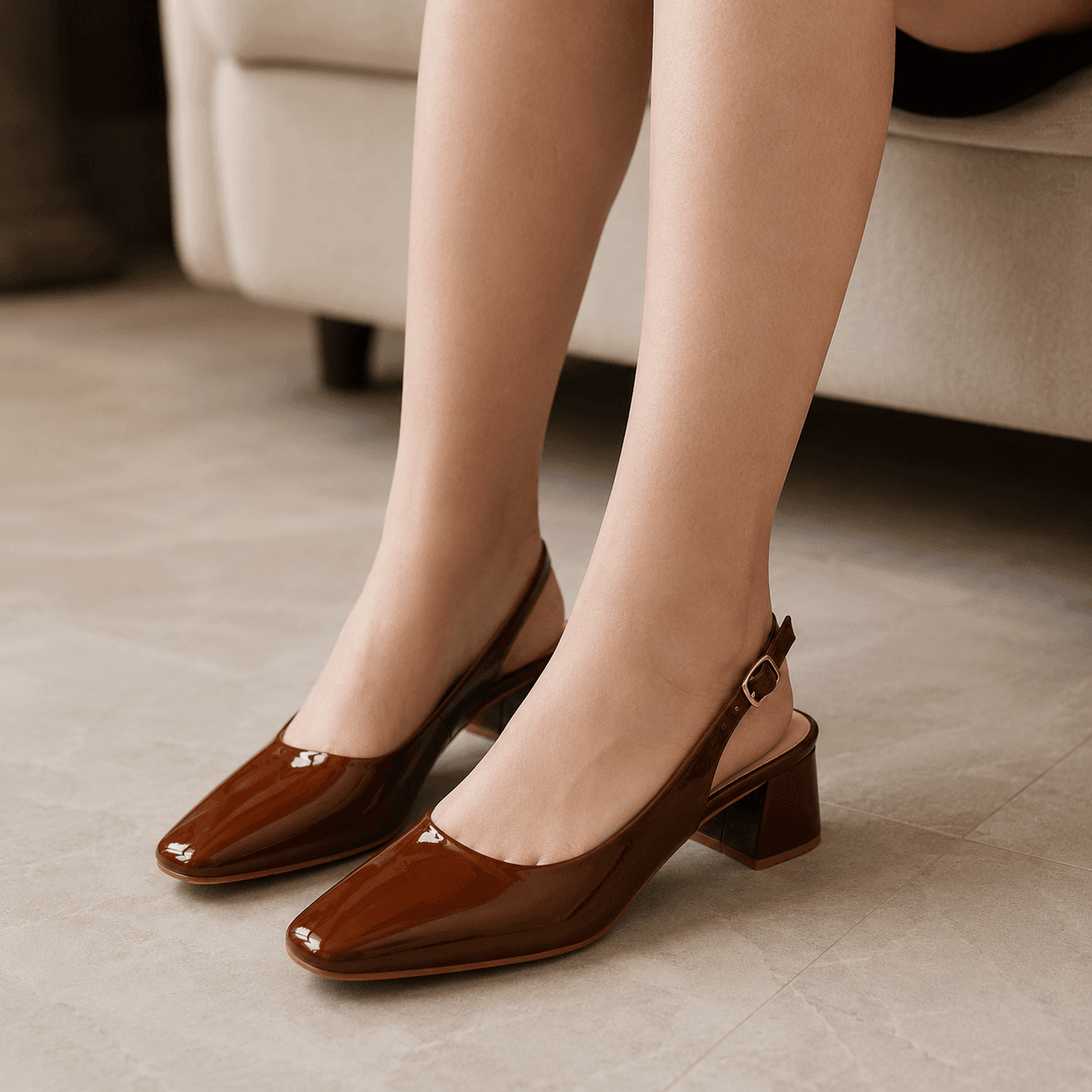
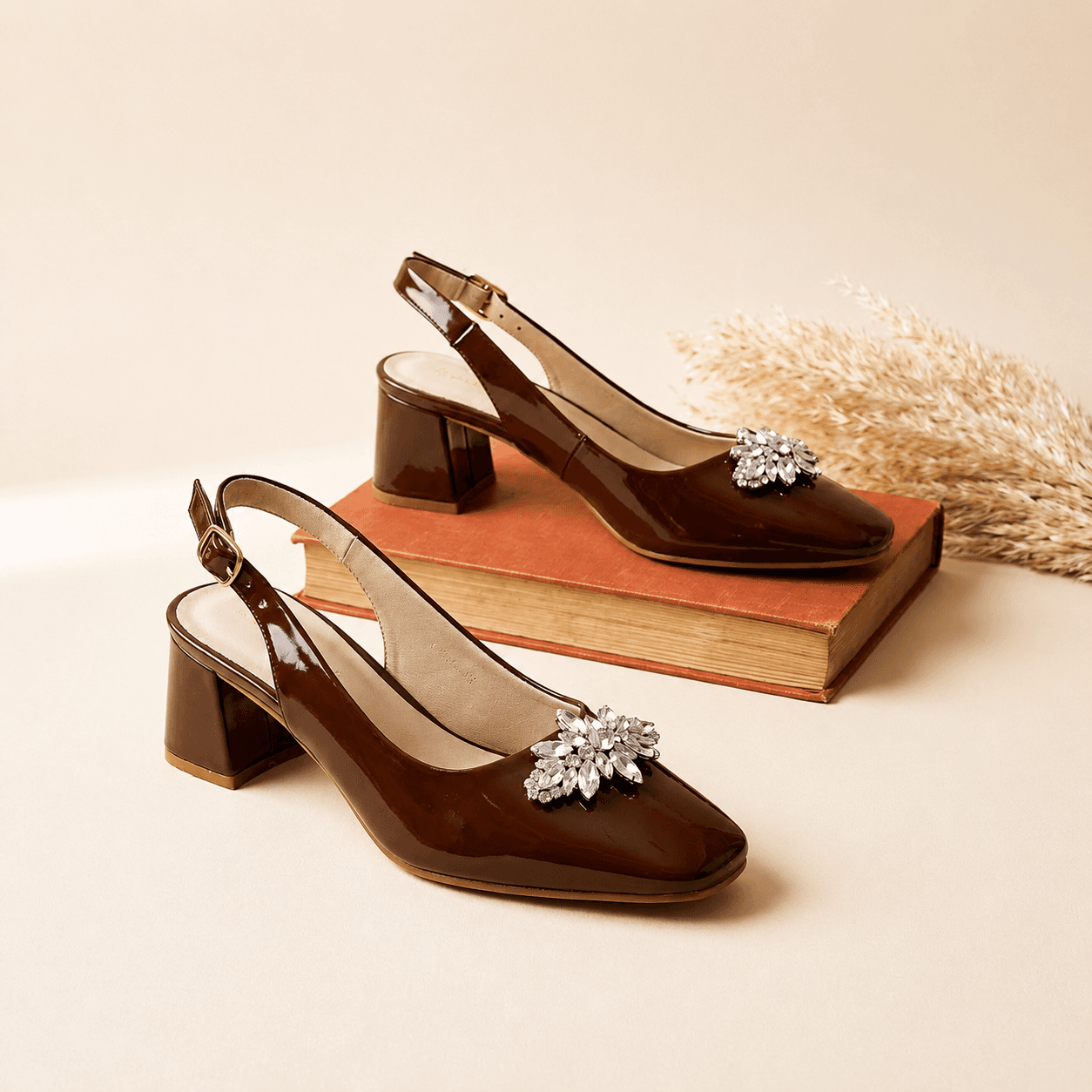
Square toe: More modern, slightly more casual. Works well with cotton, linen, and printed sarees. The square toe looks very clean and contemporary — particularly when the saree itself is a classic or minimal pattern.
Colour Matching Heels to Sarees
This is where most people overthink it. A few principles that consistently work:
Match the heel to the blouse, not the saree. If your saree is a navy blue silk with a gold blouse, a gold heel coordinates beautifully. A navy heel can also work, but gold creates more visual coherence.
Black heels work with almost any saree. This isn't a cop-out — it's genuinely versatile. A black heel under almost any saree colour looks deliberate rather than lazy. It grounds the look and lets the saree do its work.
Match the metal tone of your jewellery. Gold jewellery and gold heel. Silver jewellery and silver heel. This creates cohesion across the whole look in a way that coordinating heel-to-saree sometimes doesn't.
Contrasting light with dark: A light-coloured saree (white, cream, pastel) with a deep-toned heel (black, wine, brown) creates a deliberate, modern contrast. A deep saree with a light heel can look washed out unless the heel is metallic.
Specific Saree + Heel Combinations That Work
Silk saree (formal, wedding): 3-inch block heel or sculpted heel in black, gold, or wine. Pointed or round toe. The Clessia Wine under a cream or navy silk saree is a particularly strong combination.
Chiffon or georgette saree (party, evening): The lightness of the fabric calls for a heel with some presence. A rhinestone ankle strap heel or a pointed-toe sculpted heel in a statement colour. The Tressa Black with its rhinestone strap works beautifully under a chiffon saree for evening occasions.
Cotton or linen saree (office, casual): Kitten heel or low block heel in a neutral or warm tone. The Crovia Chocolate Brown kitten heel pairs naturally with the earthy, casual quality of cotton and linen sarees.
Banarasi silk (wedding, festive): Gold or silver metallic heel. The richness of Banarasi fabric works best with a heel that matches its level of formality — metallic tones bring out the gold or silver weaving in the fabric.
What to Avoid
- Very high stilettos for long saree occasions — the combination of managing the drape and balancing on a thin heel is genuinely difficult over hours
- Heels with ankle straps for sarees with heavy embroidery at the hem — the strap can catch on embroidered fabric
- Very casual shoes (block heel sandals, flat mules) with formal silk sarees — the contrast in formality reads as unintentional rather than deliberate