
From Battlefield to Runway: The Surprising History of Heels (and Where They're Headed Next)
By Classie Journal
Every time you slip on a pair of heels, you're stepping into roughly 4,000 years of history — one that has almost nothing to do with what you'd expect.
It Started With Horses, Not Fashion
Here's something most people get wrong about the history of heels: they weren't invented to look good. They were invented so riders would not fall off their horses.
Surprised?
Early stirrups had no grip and no lock — a loop of metal or leather that your foot slid into. Without something to stop it, your foot could easily slide far through, especially at a gallop or in the middle of battle. Persian cavalry solved this problem simply: a heel on the boot that caught the stirrup and kept the rider planted.
The Egyptians got there even earlier. Around 3500 BCE, upper-class Egyptians wore some of the earliest known heeled shoes as a mark of elevated social status — proof that long before heels meant "riding gear," they already meant "I am not like everyone else."
So from two different corners of the ancient world, heels picked up two identities at once: practical equipment and a status symbol. Centuries later, that second identity is the one that won out — but the journey between those two points is stranger than most people expect.
How Heels Crossed From Battlefield to Ballroom
By the time Persian riding fashion drifted into Europe, something interesting happened. Europeans took a piece of practical military gear and turned it into the exact opposite — pure spectacle for the aristocracy.
Nobody embodied this shift more than King Louis XIV. He was noticeably short for his time, and he leaned on heels — sometimes several inches high — well into his sixties, just to look taller in front of his court. He even issued an edict that only nobility could wear red heels, turning footwear into a literal marker of who belonged to the ruling class.
This is really the moment when heels stopped being about horses and started being about hierarchy.
And the irony doesn't stop there. Around this same period, European aristocrats fell in love with heels for a reason that sounds almost backwards today: heels were impractical, and that was exactly the point. The less useful your shoes were, the more useless you were allowed to be — and in the eyes of 17th-century aristocracy, that was the whole idea. Comfort wasn't the goal. It was almost the opposite of the goal.
When Heels Became "Feminine"
Here is something that surprises everyone the first time they hear it: heels were not a women's item for most of their history. For centuries they belonged to men. Soldiers, horsemen, kings. If anything, early in European fashion history, women who wore heels were seen as trying to look more masculine.
The shift did not happen overnight. It was around the 1630s that high heels in fashion started being associated with femininity for the first time — women's shoes became more delicate and ornamented while men's stayed chunkier and more practical.
It took nearly another century for the shift to fully settle. By the 18th century, heels had moved firmly into women's fashion specifically, and men quietly stepped away. Practical, lower shoes became the norm for men — partly driven by Enlightenment ideas that valued reason and practicality over ornament.
Which means the idea that "heels are a women's shoe" — something that feels like an unquestionable fact today — is actually one of the newer chapters in a very long story. Heels have spent far more of their existence on men's feet than on women's.
The Rise, Fall, and Comeback
Heels did not just keep climbing in popularity after that. Like fashion, they had a fall too.
By the 1800s, heels had mostly disappeared. Clothing turned more conservative across Europe and America, and women shifted to flat, plain leather shoes. It took decades — and, strangely, a world war — to bring them back. During World War Two, pin-up posters kept heels in popular culture even while practical flat shoes dominated everyday life. By the time the 1950s arrived, heels came roaring back, now tied to ideas of glamour, femininity, and the post-war optimism of the era.
From there, things moved fast. Materials and manufacturing caught up with ambition by the mid-20th century, and that's really when the stiletto was born, followed by the huge range of heel shapes, heights, and styles that we think of as "modern heels" today.
Where Heels Are Headed Now: Comfort Meets Style
For most of their 4,000-year history, heels forced a choice: status and style, or comfort — rarely both. That's the one problem heels have never fully solved, no matter how far the design has come.
Until now.
Enter Classie: Heels Built for How You Actually Live
Classie didn't want to make another pair of heels. Classie wanted to solve the one thing that heels have never quite figured out in four thousand years: why comfort, style and affordability always felt like they had to be traded against each other.
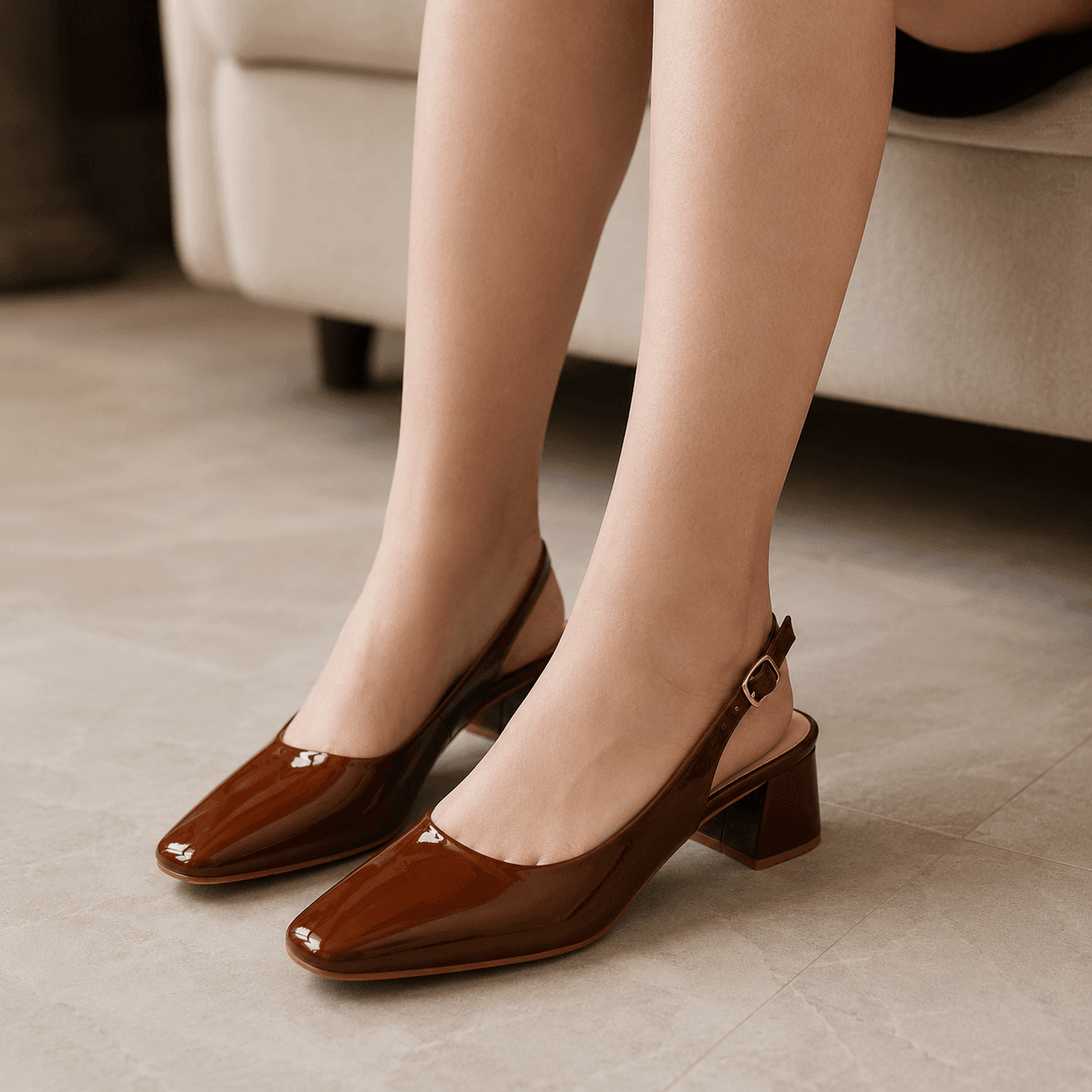
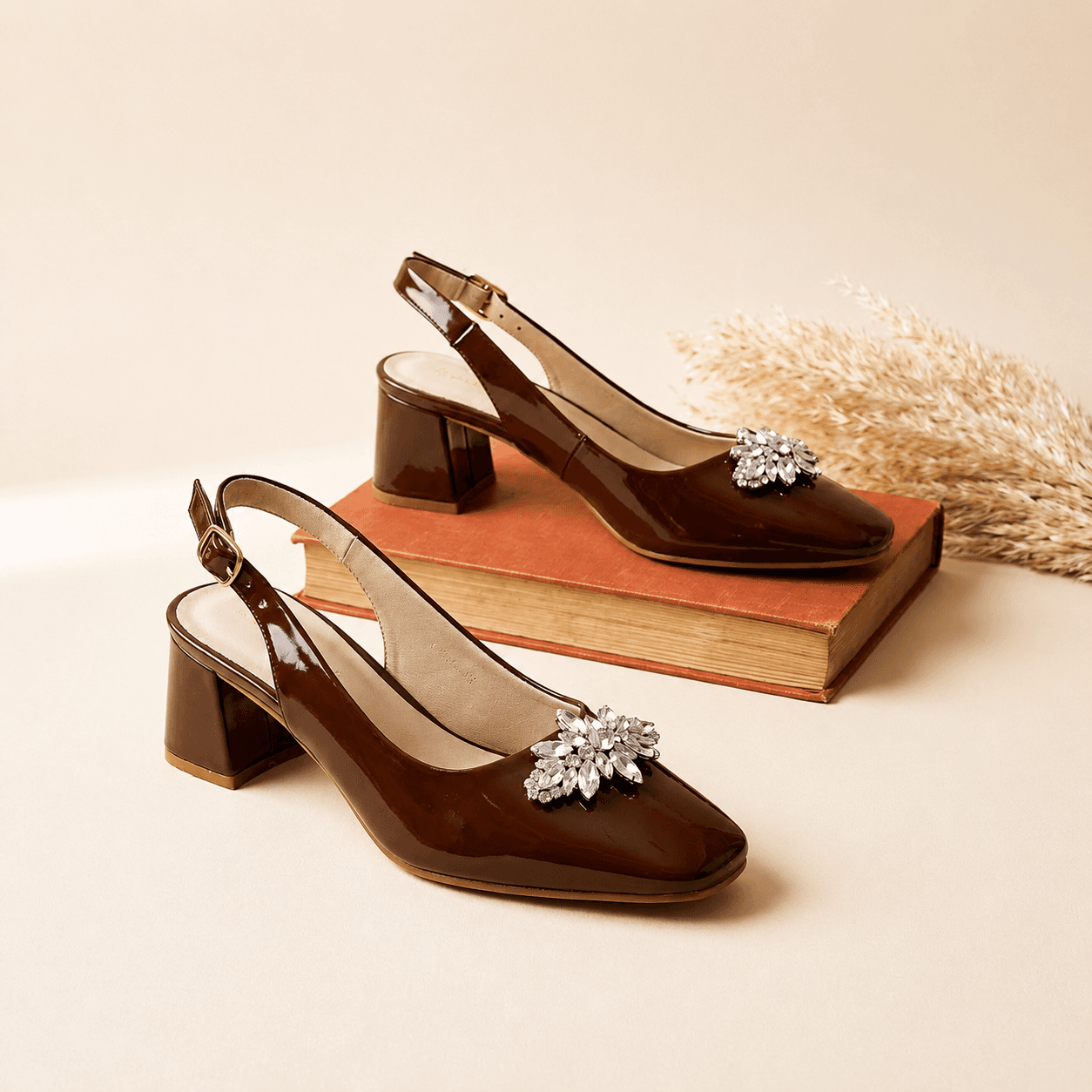
That's the whole idea behind how we design. Instead of five pairs of heels for five different outfits, Classie heels come with interchangeable accessories that attach right onto the base — so one pair of heels can go from a Monday meeting to a Saturday wedding without missing a beat. The base is designed for all-day wear. The accessories are designed to make every version of you feel complete.
Because that feeling matters. Heels have carried a sense of pride and status since Louis XIV's court, and that hasn't changed. What's changed is that you shouldn't need a full wardrobe of shoes, or a sacrifice of comfort, to feel it.
The Bottom Line
Heels have come a long way — war gear, royal status symbol, gendered fashion statement, and now, a category finally being rebuilt around real life instead of just appearances. Four thousand years later, the question heels have always carried is still the same: how do you carry yourself through the world?
That's the question Classie was built to answer.
Explore the Classie Collection →